

Students Help Preserve East Portal Cabins
Jun 1, 2026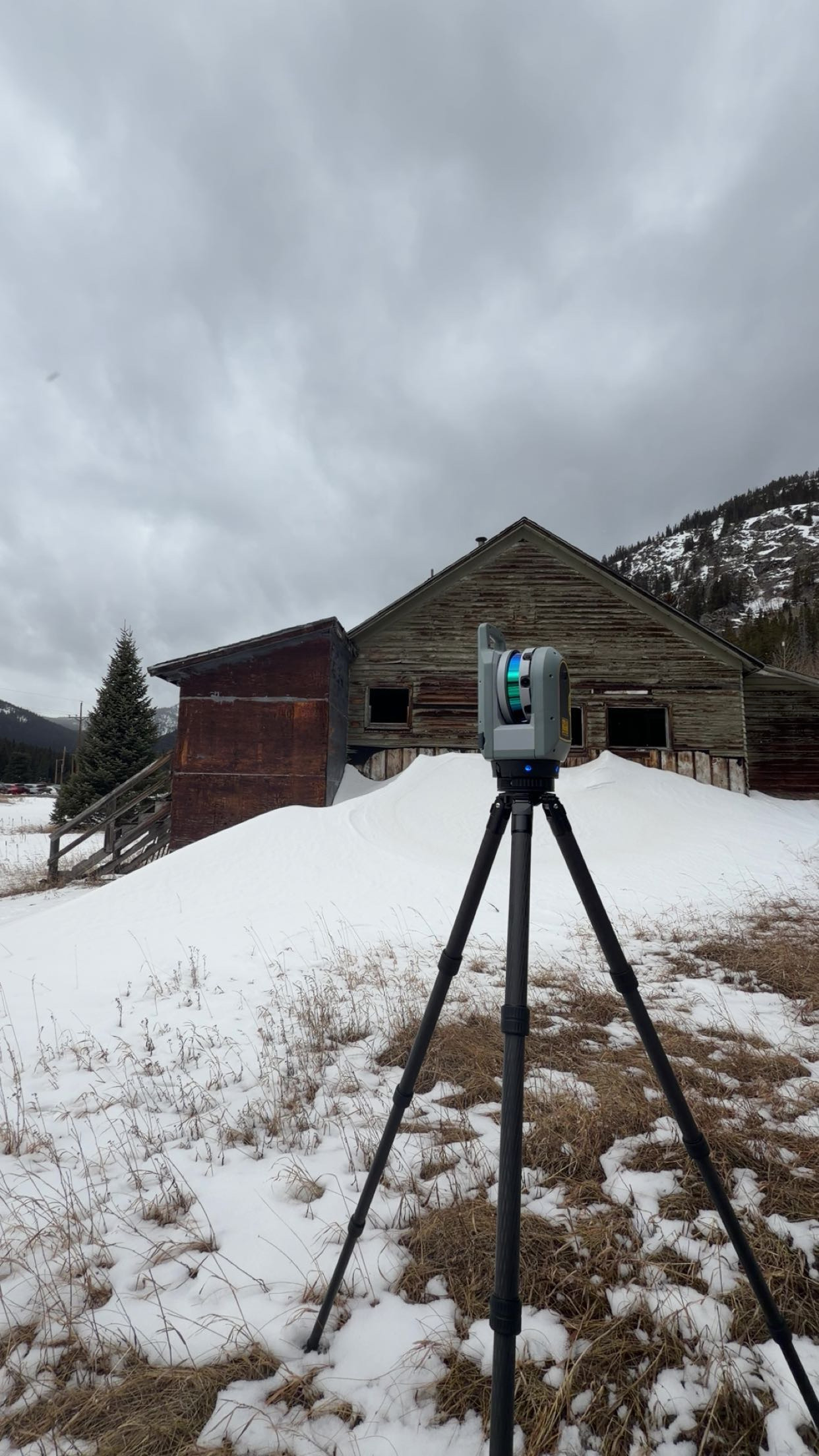
Another preservation effort in books. In the Spring of 2026, a group of CU Denver students travelled to Gilpin County, at the eastern entrance to the Moffat Tunnel, where the East Portal Camp Cabins have been located since 1922. This Historical village represents the vision of David H. Moffat and Clifford A. Betts, who intended for the town to be a stop along the rail connection between Denver and the West Coast. However, “the Moffat Tunnel ultimately shortened transcontinental routes by approximately 150 miles and permanently altered transportation across the Continental Divide.” (“East Portal Camp Cabins - Colorado Preservation, Inc.”). Over 100 years later, six students from the CU Denver Department of Engineering and Construction utilized the Trimble technology tools available to them to assist Colorado Preservation Incorporated determine what of the remaining cabins can be salvaged and preserved.
The East Portal Cabins was originally a town designed as a self-sustaining community for the tunnel construction workers and their families. “Contractors Hitchcock and Tinkler implemented a deliberate “factory system” approach to workforce stability, designing a self-contained town that combined housing, workspaces, food access, medical care, and recreation to reduce labor turnover and improve safety and productivity. Under the direction of engineer Clifford A. Betts, the camp was organized along a central east-west axis extending from the tunnel portal, with industrial functions to the south, residential and social spaces to the north, and a distinct “Cottage Village” of eleven single-family homes reflecting contemporary residential design.” (“East Portal Camp Cabins - Colorado Preservation, Inc.”). However, only 5 cabins on the East side of the tunnel remain, and nothing from the west side still stands. Colorado Preservation Inc. is committed to ensuring these cabins can be preserved and potentially restored to show the dedication and intense work environment people endured to build the tunnel that is still used today. “(The cabins) constitute the sole remaining built connection to the workers who constructed the tunnel and to the lives organized around that labor, preserving a rare physical record of the community that made the project possible… In that sense, the cabins function as documentary evidence in built form, capturing aspects of the project that do not survive in engineering records alone.” (“East Portal Camp Cabins - Colorado Preservation, Inc.”)
This is where the group of students comes in. Using a Trimble X9 Laser Scanner, students Mahdi Alattar, Zamira Chavez, Ali Alhabshi, Mohammed Aljedi, Hamad Boodai, and Abdulaziz Alshemali were able to gather 3D and laser scans of 3 of the remaining structures. Because of safety concerns, the students were not allowed to enter the buildings, so all scans were taken from outside. The group walked away with impressive visuals and a clear understanding of the building’s current condition.
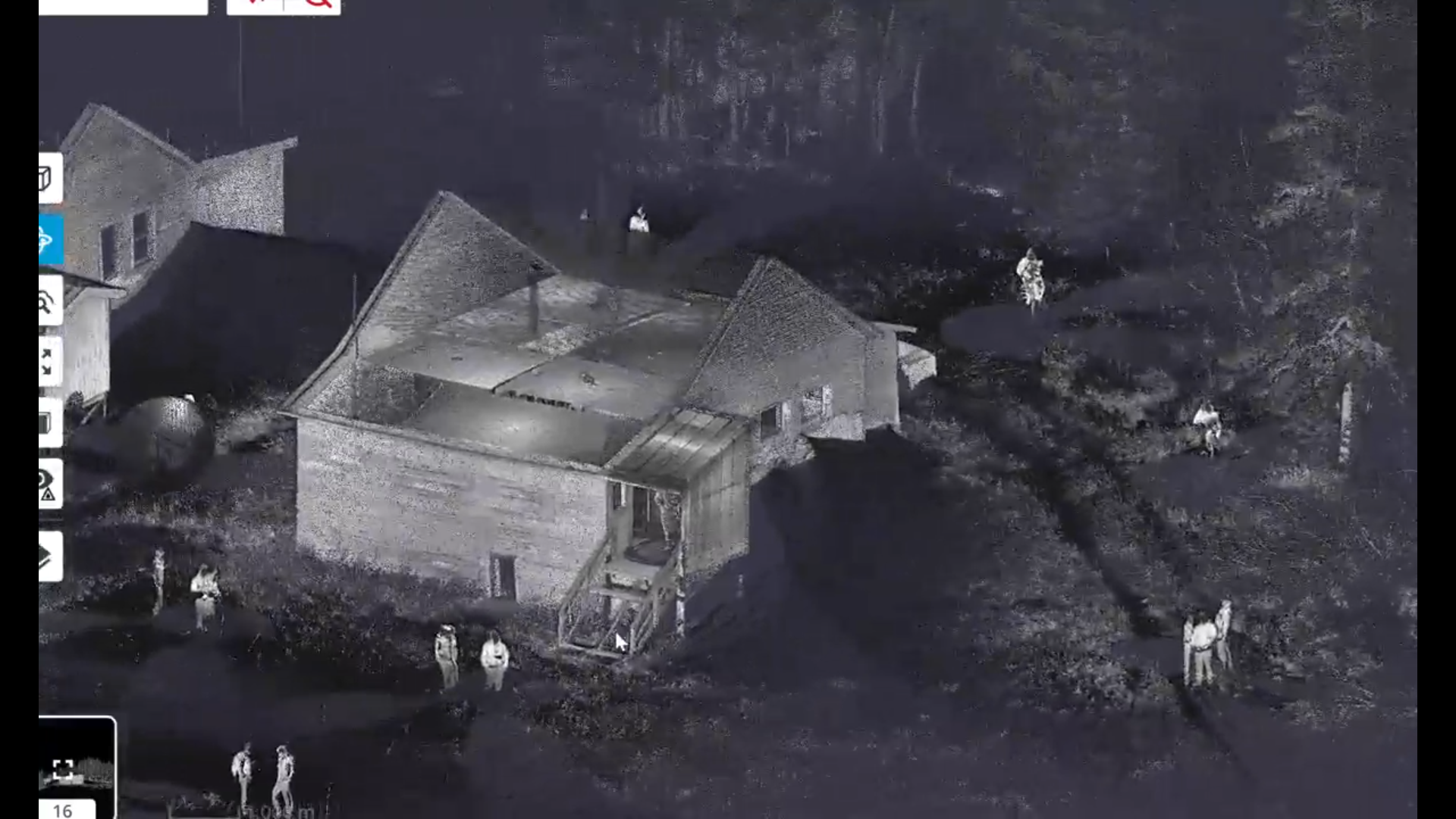
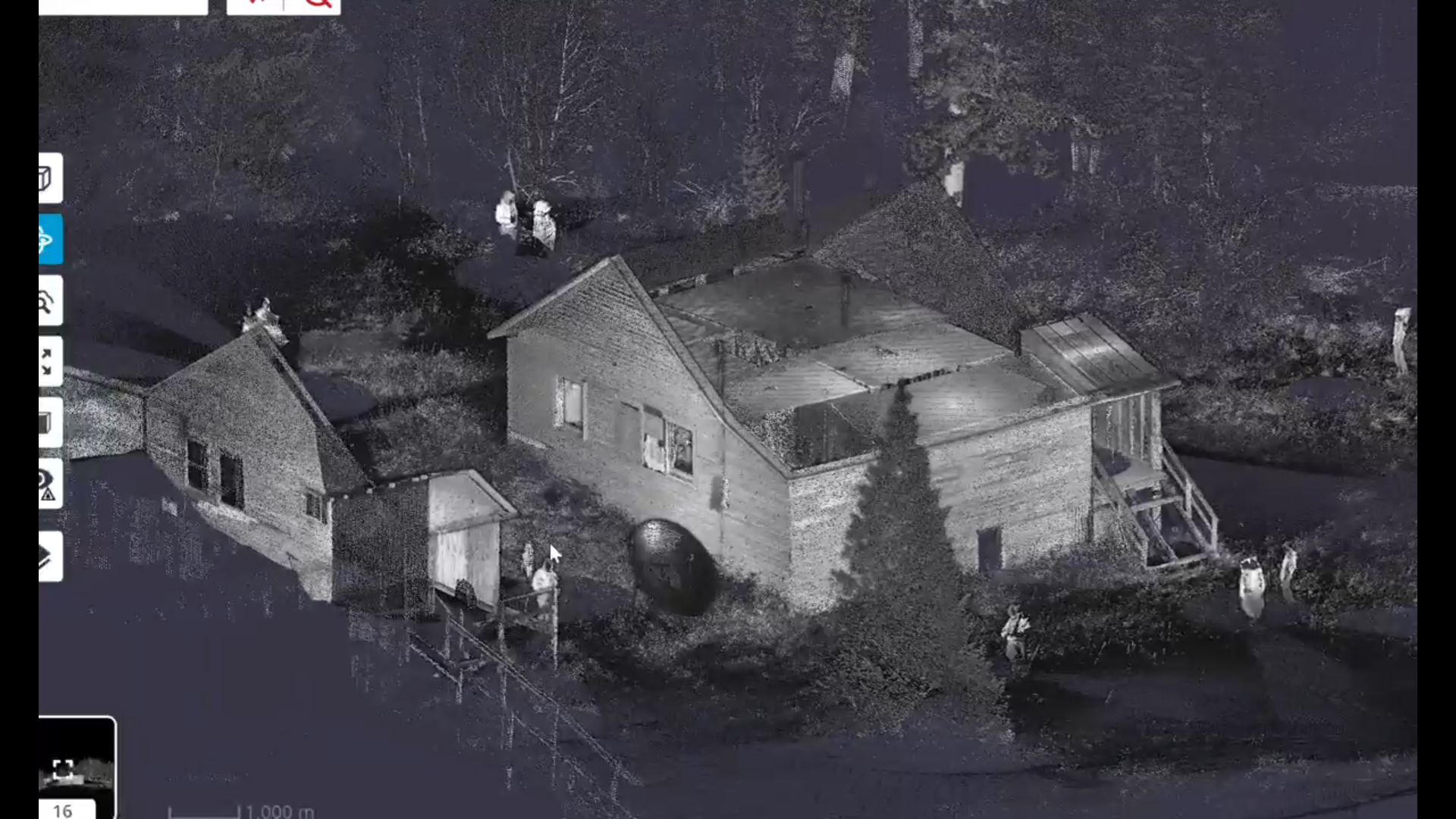
“The technology was very easy to use,” said students Abdulaziz Alshemali and Hamad Boodai in an interview about the project. They shared how the scanners were versatile and helped them overcome major challenges related to safety and weather conditions. “It’s an amazing piece of technology,” said Boodai highlighting how they used the X9 to scan hard-to-reach places. Alshemali and Boodai explained how the project posed challenges for the Colorado Preservation Incorporation because the buildings are so old that no records of their dimensions survive. However, with these new scans, the organization now has a stronger idea of what to expect when considering preservation plans. Alshemali and Boodai hope that their team’s efforts will aid in transforming the cabins into useable, educational and historical attractions in the front range region. “As international students, it would be amazing to come back in the future with our families and see the impacts of our work,” said Boodai.
As of now, the cabins face many risks. “The structures face multiple threats from demolition by neglect, prolonged exposure to severe mountain conditions, wildfire risk, and vandalism.” (“East Portal Camp Cabins - Colorado Preservation, Inc.”) The current owners, Union Pacific and Gilpin County, are working with Colorado Preservation Inc. to discuss options for the historical site. Fortunately, in 2023, the cabins were officially designated a Gilpin County Local Historic Landmark. However, this does not mean preservation efforts can begin. “Without a clear preservation pathway, the cabins will continue to lose historic fabric and interpretive value; with one, they could support a compatible adaptive reuse approach consistent with the Secretary of the Interior’s Standards, allowing the buildings to remain both historically legible and publicly meaningful.” (“East Portal Camp Cabins - Colorado Preservation, Inc.”)
Works Cited
“East Portal Camp Cabins - Colorado Preservation, Inc.” Colorado Preservation, Inc., 2 Apr. 2026, www.coloradopreservation.org/endangered-place/east-portal-camp-cabins/. Accessed 27 May 2026.